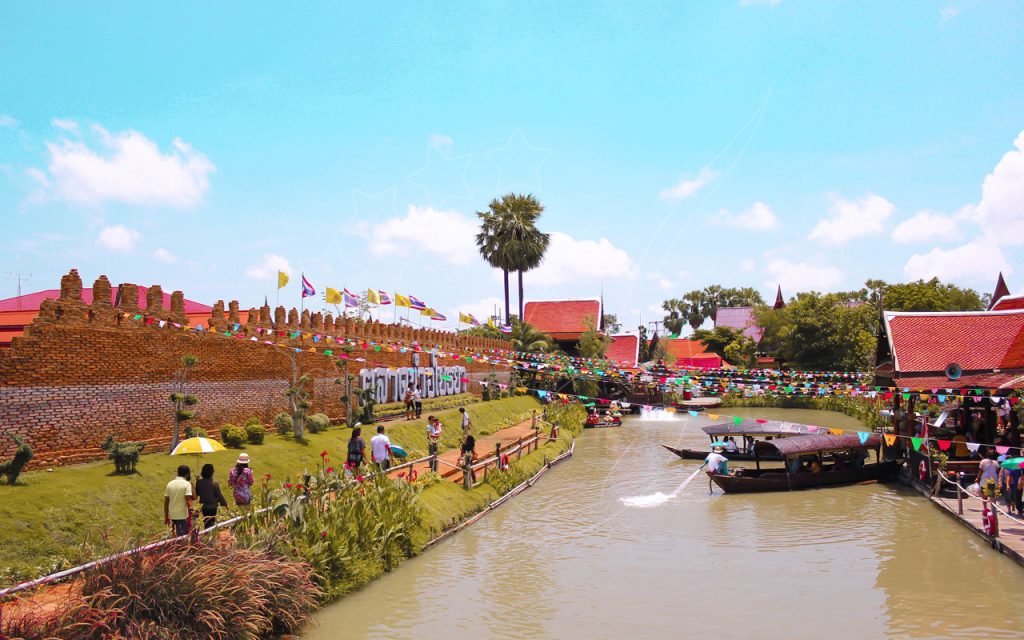
Photos are for illustration and may not show current conditions. Report this photo
Ayutthaya Information
Located in the central plains 85 km north of Bangkok, Ayutthaya the ancient Thai capital is an incredible city full of history and culture, adding it into your itinerary would be a really great choice. Many ways are provided to get to this ancient city. If you prefer traveling by plane your only option is taking a flight to Bangkok’s Don Muang airport and take a train to Ayutthaya from the Don Muang Train Station, as there aren’t any direct flights. Trains to Ayutthaya can be found departing from many destinations like Surin, Phitsanulok, Nong Khai, Ubon Ratchathani and Hualamphong Train Station in Bangkok. Bus and minivan transportation from Bangkok and Chiang Mai are also available. Cruises are also provided between Ayutthaya and Bangkok via the Chao Phraya River.
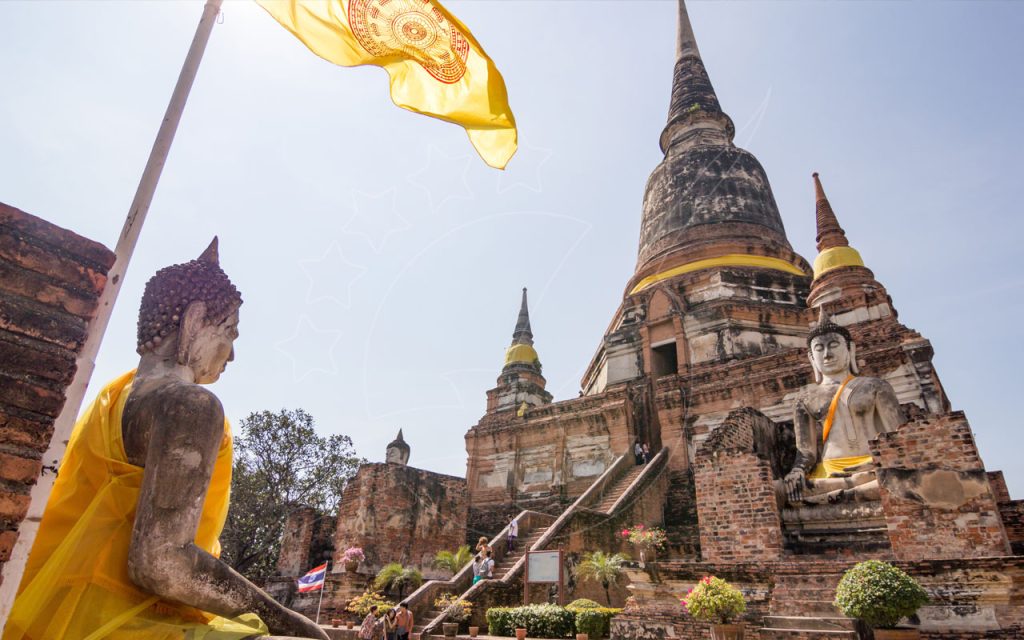
Ayutthaya Information
About Ayutthaya
Como hogar de una de las ruinas más preciosas y sagradas de Tailandia, Ayutthaya es un destino de profunda historia y gran valor. La antigua capital comercial de Asia es un lugar increíble para realizar una excursión de un día y conocer a fondo la cultura tailandesa y su magnífico imperio.
La ciudad se fundó en 1350 y fue declarada Patrimonio de la Humanidad por la UNESCO en 1991. En el año 1700, Ayutthaya era la ciudad con mayor población del mundo.
Today, Ayutthaya is a compact riverside city in central Thailand, ringed by the Chao Phraya, Lopburi and Pa Sak rivers. The historic park sits at the heart of the island, while modern shops, markets and guesthouses spread around it — which makes the city easy to cover in a single day or a relaxed overnight stay.
How to get to Ayutthaya
Ayutthaya lies on the main corridor heading north out of Bangkok, so it is one of the more straightforward destinations to reach in central Thailand. We currently list several routes routes serving Ayutthaya, with fares from our online fares.
Because Ayutthaya is a short hop from the capital, many travellers treat it as a day trip and return the same evening. If you plan to continue north or west afterwards, it can also work as a stopover rather than a there-and-back excursion.
Services are operated by providers such as our transport partners. Departure frequency, journey time and vehicle type vary by operator and by day of the week, so check the live results for the date you want to travel — the timetable shown at booking is the one that applies.
Arrival points in the city
Arrivals cluster around a few practical points: the city's rail station on the east bank of the Pa Sak river, the main bus and minivan terminal, and drop-off points closer to the historic park. Private transfers can usually take you directly to your hotel address.
Check your ticket carefully before you travel, as the arrival point named on it determines how far you still have to go once you step off. Some drop-offs are a short walk from the ruins; others need a tuk-tuk or songthaew connection into the old city.
Getting around once you arrive
The historic island is flat and fairly compact. Bicycles and motorbikes are widely rented near the station and around the guesthouse area, and tuk-tuks can be hired by the hour for a temple circuit. Boat trips around the island are also popular in the late afternoon.
Popular routes to and from Ayutthaya
The busiest demand is on the Bangkok corridor, in both directions, followed by connections to other central and northern Thai destinations. Live availability, prices and operators for each pairing are shown in the search results.
- Bangkok to Ayutthaya — the most-searched connection, popular for day trips
- Ayutthaya to Bangkok — for return legs and onward airport connections
- Northbound connections towards Lopburi, Phitsanulok and Chiang Mai
- Onward links towards Kanchanaburi and other central-region destinations
If you are building a longer itinerary, compare options on our Bangkok travel and transport guide before you book, and see the routes to Chiang Mai if you plan to carry on north.
Practical travel information
A few things worth knowing before you set off:
- Best time of day: early morning departures give you the coolest hours at the temple sites and leave room for an afternoon return.
- Season: the cooler, drier months are the most comfortable for sightseeing on foot or by bicycle. Expect heat and humidity year-round.
- Dress code: the temple ruins are active religious sites. Cover shoulders and knees, and remove shoes where signs ask you to.
- Tickets and entry: several individual temples charge their own entry fee, and combined passes for the historic park are sold locally.
- Luggage: allowances differ by operator and vehicle. Check the conditions shown with your fare before booking if you are carrying large bags.
- Booking ahead: weekends, Thai public holidays and festival dates fill up first, so reserve early for those.
What to see and do in Ayutthaya
Most visitors come for the ruins of the old royal capital, concentrated in the UNESCO-listed historic park.
- Wat Mahathat — best known for the Buddha head held in the roots of a fig tree.
- Wat Phra Si Sanphet — the three restored chedis of the former royal palace grounds.
- Wat Chaiwatthanaram — a riverside temple complex, especially photogenic at sunset.
- Wat Yai Chai Mongkhon — a large reclining Buddha and a tall central chedi you can climb.
- Ayutthaya Historical Study Centre — useful context on the city at its height.
- Night market and river cruises — a low-key way to close the day.
Two or three temples make a comfortable half-day. A full day allows a wider circuit plus time at the market or on the water.
Book your trip to Ayutthaya
Enter your travel date and departure point to compare available departures, prices and operators for Ayutthaya in one place, then book online and receive your ticket by email. Search availability to see live options for your dates.
Highlights
Wat Yai Chai Mang Khon
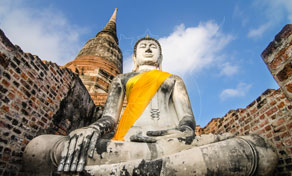
One of the most interesting sites you’ll encounter while traveling in Ayutthaya, Wat Yai Chai Mang Khon perhaps isn’t your typical go-to destinations, however, it will leave you with an experience you wouldn’t forget and will be among the most memorable of your trip. Aside from the stunning statues featuring molded golden leaves, you’ll find when entering the temple, the most memorable experience is seeing the giant statue of a sleeping Buddha, which its sole as the locals believe has magical abilities. The locals rub coins on the statue’s feet, to get a good luck blessing. The temple regularly hosts many festival and celebrations inside its holy grounds.
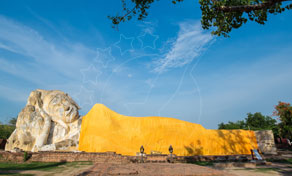
Wat Lokaya Sutha
Located northwest of Ayutthaya in the Pratu Chi sub-district and west of the Royal Palace, Wat Lokaya Sutha is a restored ruin of an amazing monastery. Most tourists highlight the enormous 42-meters reclining statue of Buddha that was restored in 1954. While you’re there you will encounter the ancient remains of the monastery and a small altar where you can make offerings. If you’re looking to wind down while you’re there, you can enjoy a nice drink at one of the roadside cafes overlooking the temple.

Ayutthaya Historical Park
located in the zone which is considered to be as a UNESCO World Heritage Site and has over 65 beautiful ruins and temples. The Ayutthaya Historical Park is one of the best places in the region for all of the history lovers and archaeology enthusiasts. Aside from the historical value, the park has an amazing view that is accented with beautiful Buddha statues, greenery and a fabulous landscape, making it a super relaxing vista. It’s definitely one of Ayutthaya’s highlights.
Wat Chaiwatthanaram
Located on the west bank of the river of Chao Phraya, Wat Chaiwatthanaram is an ancient Buddhist temple that is one of the must-see destinations when you visit Ayutthaya. It’s known for its intricate chapels or Chedis that are decorated with amazing colorful paintings illustrating the life of Buddha. The Chedis are also connected to secret passages. You’ll find the area circled by 120 Buddha statues giving the holy ground even more serene ambiance.


Frequently asked questions
Where is the pier that my ferry departing from?
Phuket Ferry :
We understand that pier details are important to our customers. That’s why we’ve made the information as clear as possible. Your departing pier address is clearly shown on your e-ticket, which we sent to your email. Additionally, go to our Pier Information page for the most comprehensive local pier information you can find anywhere. Finally, if you still need more information, contact our Customer Service Agents; we are happy to help.
Ferry Samui :
FWe understand that pier details are important to our customers. That’s why we’ve made the information as clear as possible. Your departing pier address is clearly shown on your e-ticket, which we sent to your email. Additionally, go to our Pier Information page for the most comprehensive local pier information you can find anywhere. Finally, if you still need more information, contact our Customer Service Agents, we are happy to help.
Bali Ferry :
We understand that pier details are important to our customers. That’s why we’ve made the information as clear as possible. Your departing pier address is clearly shown on your e-ticket, which we sent to your email. Additionally, go to our Departure Point Information page for the most comprehensive information you can find anywhere. Finally, if you still need more information, contact our Customer Service Agents, we are happy to help.
What are the tourist seasons ?
Phuket Ferry :
Phuket really just has two seasons, which are known as "high season" and "low season" (or "green season"). During the low season months (May- September), boat numbers are reduced. During the high season (October - April), boats to the surrounding islands are increased so you will have some more options.
Ferry Samui :
There are three distinct weather seasons on the tropical island of Koh Samui: the dry season (December until February), the hot season (March until August) and the rainy season (September until November).
Bali Ferry :
Bali actually has a variety of tourist periods, notably around the Balinese New Year, 15 December - 15 January, and 1 June - 30 September. During these high traffic periods, boats to the surrounding islands are increased so you will have some more options. The quieter periods are between 16 January - 30 April and 1 October - 14 December historically.
Will bad weather affect my travels?
Ferries are large and can usually operate in the rain, except in extremely bad weather. During storms or strong winds, the journey may take a little longer than usual.
Speedboats are more likely to be canceled than ferries. If a trip is canceled due to bad weather, you can choose to receive a refund or reschedule. Please note that refunds for bad weather are only issued if the ferry operator cancels the trip.
On rough days, we recommend bringing motion sickness medication and taking it about 20 minutes before boarding if you are prone to seasickness. Boat staff may also provide Dramamine upon request, but you will need to remain indoors during rough conditions. On sunny and calm days, the sun deck is open for passengers to enjoy the weather.
What's the boarding process on the day of my trip?
At the pier named on your ticket, look for the staff of the ferry operator listed on your ticket as well. Please present your e-ticket (QR code) from your phone or other device—they’ll provide you with a sticker and/or boarding pass and direct you to your boat. Most piers have staff available to help load your luggage. In Koh Samui, staff are usually stationed at booths near the boarding area; at other locations, they’re typically near the boats, wearing their company uniforms.
When will I receive my ticket confirmation?
After completing your online booking, your reservation will remain in “Pending” status until it is processed. Once confirmed, we will send your e-ticket via email. The process is usually very quick.
On the day of travel, please present your e-ticket to the ferry staff at the relevant booking counter. If you do not receive your confirmation within 24 hours, contact us immediately.
What are the baggage allowances?
Your ferry e-ticket includes ferry transport, baggage fees, and handling. The free baggage allowance per person is 20–25 kg, depending on the operator. If your baggage exceeds this limit, you can pay the extra fee directly to the ferry operator in cash.
To check the baggage allowance for your specific trip, please refer to the trip details for your selected route.