
Photos are for illustration and may not show current conditions. Report this photo
Siem Reap Information
A breathtakingly beautiful resort town in northwestern Cambodia, Siem Reap is an incredible gateway to some of the most precious and culturally rich Angkor ruins. It is a must-visit when you’re in Cambodia and there are many ways to get there. Siem Reap has an International Airport, which is only 7 km from the town center and one of the easiest ways to get there. Many flights are serviced by the airport coming from and going to many well-known places including Bangkok, Shanghai, Luang Prabang in Laos and Singapore. If you are looking for a much cheaper option, there are many buses or minivans you can take from Pattaya, Chiang Mai, Bangkok, Phnom Penh, Laos Border, Koh Kong and more. What is unfortunate is that there’s no direct railway line in Siem Reap, although, the only nearby station is Sisophon station. Also, the only direct boat rides available are between Siem Reap and Phnom Penh through the Tonle Sap River.
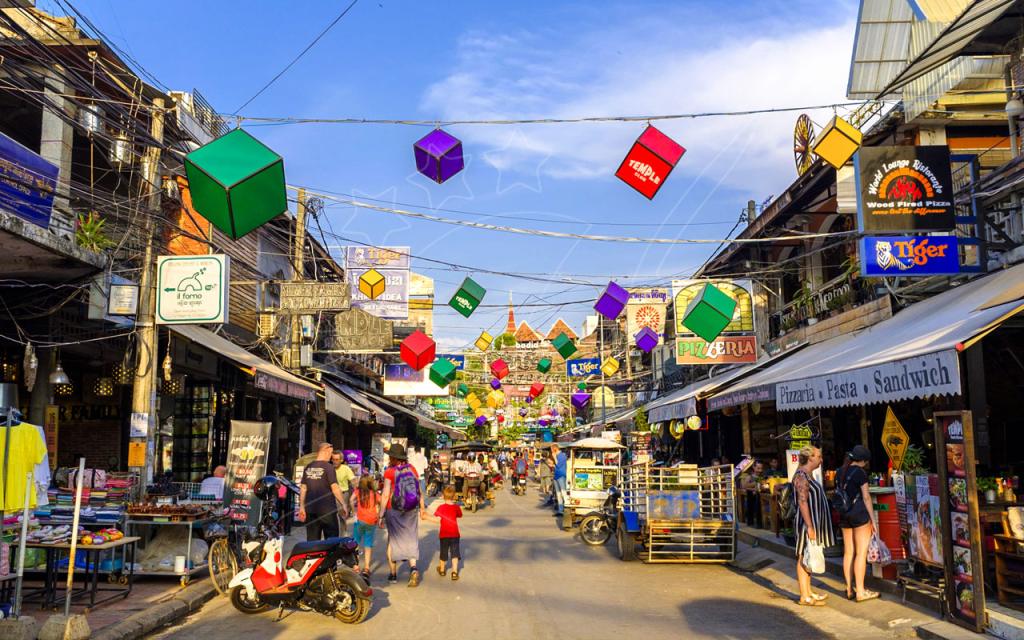
Siem Reap Information
Siem Reap: gateway to Angkor
The land of majestic temples, the gateway to the Angkor Region, seat of the Khmer kingdom, those titles only capture a glimpse of what Siem Reap has to offer. Siem Reap is a well-known resort town in Northwestern Cambodia, known for some of the most gorgeous and interesting temples on earth. But, that's not all, as it has much more to offer. Between an intriguing cultural scene, wonderful nature, amazing temples, fancy hotels, delicious food and tranquil spas, Siem Reap has certified itself as an ultimate people pleaser and a must-visit destination.
Most visitors arrive to explore the Angkor Archaeological Park, then stay on for the riverside cafés, night markets and countryside villages that surround the town. Because it sits at the centre of Cambodia's northwest, Siem Reap is also a natural hub for onward travel across the country and towards neighbouring borders.
How to get to Siem Reap
Overland travel is the most common way to reach Siem Reap. National highways link the town with the capital, the coast and the Thai border, and services run throughout the day rather than on a single fixed departure. We currently list several routes connections serving this destination, with fares from our online fares.
Journey times vary with the distance covered, the road conditions and the number of stops on the way, so check the exact duration shown on your chosen departure before you book. Live schedules and seat availability are displayed at the moment of search, which is the most reliable source for today's timings.
Operators serving the route
Services are run by companies such as our transport partners. Vehicle standards differ between providers, so it is worth comparing what each includes: seat type, air conditioning, luggage allowance, rest stops and whether hotel pick-up or drop-off is offered. Each departure page lists the operator and the amenities confirmed for that service.
Departure and arrival points
Most long-distance services use the town's central bus and transport terminals, with some operators running their own offices and pick-up points closer to the main hotel districts. Arrival points are usually a short tuk-tuk ride from the Old Market and Pub Street area, where much of the accommodation is concentrated.
Because pick-up and drop-off locations differ by operator, always read the address printed on your ticket. If a service includes hotel transfer, you will normally be asked to confirm your accommodation name when booking.
Nearby transport connections
Siem Reap connects onward to Cambodia's main travel corridors: the capital and the Mekong region to the south-east, the Tonlé Sap lake communities nearby, the southern coast and islands, and the western border crossings towards Thailand. Travellers heading to the coast often break the trip in the capital rather than travelling straight through.
Compare timings and fares on our Cambodia route pages, or browse destinations near Siem Reap to plan a multi-stop itinerary.
Popular routes to and from Siem Reap
The busiest connections link the town with Cambodia's capital and largest city, with the Tonlé Sap and Mekong river towns, and with border points used by travellers continuing into Thailand. Coastal routes towards Cambodia's beaches and islands are also well used by visitors combining temples with time by the sea.
- Capital and central Cambodia — the highest-frequency corridor, with departures spread across the day and evening.
- Border crossings to the west — used by travellers connecting onward into Thailand.
- Coast and islands — longer journeys, often booked as an overnight or a connecting trip.
- Regional towns and lakeside communities — shorter hops for day trips and slower travel.
Exact route availability changes seasonally, so use the search box to see which connections are running on your travel date.
Practical travel information
Cambodia's dry season, roughly November to April, brings the most settled travel conditions and the largest visitor numbers. The wet season, roughly May to October, is greener and quieter, though heavy rain can occasionally affect road journeys and river levels.
- Book ahead in peak season — popular departures around Khmer New Year and the December–January period fill quickly.
- Arrive early — aim to be at your pick-up point at least 15 minutes before departure.
- Carry ID — passports are required on cross-border services and are often checked at boarding.
- Check luggage rules — allowances vary by operator and are shown on the booking page.
- Angkor passes — buy your temple pass separately; it is not included in transport tickets.
Cancellation and amendment conditions are set by each operator and shown before you pay, so read them at checkout if your plans may change.
What to see and do
Angkor Wat is the obvious starting point, but the wider park rewards more than one day: Bayon's carved stone faces at Angkor Thom, the tree-covered ruins of Ta Prohm, and the finely detailed pink sandstone of Banteay Srei further out.
Beyond the temples, the floating villages of the Tonlé Sap lake, the Old Market, Khmer cooking classes, Apsara dance performances and the town's spas fill the hours between sunrise and sunset visits. Cycling or tuk-tuk tours through the surrounding countryside are an easy way to see rice fields and village life.
Book your trip to Siem Reap
Compare several routes routes, check today's departures and secure your seat online in a few steps. Fares start from our online fares, and your ticket is confirmed by email straight after payment.
Search availability for your travel date and book your journey to Siem Reap.
Siem Reap Highlights

Angkor National Museum

Phare the Cambodian Circus

Bayon

Angkor Wat


Frequently asked questions
Where is the pier that my ferry departing from?
Phuket Ferry :
We understand that pier details are important to our customers. That’s why we’ve made the information as clear as possible. Your departing pier address is clearly shown on your e-ticket, which we sent to your email. Additionally, go to our Pier Information page for the most comprehensive local pier information you can find anywhere. Finally, if you still need more information, contact our Customer Service Agents; we are happy to help.
Ferry Samui :
FWe understand that pier details are important to our customers. That’s why we’ve made the information as clear as possible. Your departing pier address is clearly shown on your e-ticket, which we sent to your email. Additionally, go to our Pier Information page for the most comprehensive local pier information you can find anywhere. Finally, if you still need more information, contact our Customer Service Agents, we are happy to help.
Bali Ferry :
We understand that pier details are important to our customers. That’s why we’ve made the information as clear as possible. Your departing pier address is clearly shown on your e-ticket, which we sent to your email. Additionally, go to our Departure Point Information page for the most comprehensive information you can find anywhere. Finally, if you still need more information, contact our Customer Service Agents, we are happy to help.
What are the tourist seasons ?
Phuket Ferry :
Phuket really just has two seasons, which are known as "high season" and "low season" (or "green season"). During the low season months (May- September), boat numbers are reduced. During the high season (October - April), boats to the surrounding islands are increased so you will have some more options.
Ferry Samui :
There are three distinct weather seasons on the tropical island of Koh Samui: the dry season (December until February), the hot season (March until August) and the rainy season (September until November).
Bali Ferry :
Bali actually has a variety of tourist periods, notably around the Balinese New Year, 15 December - 15 January, and 1 June - 30 September. During these high traffic periods, boats to the surrounding islands are increased so you will have some more options. The quieter periods are between 16 January - 30 April and 1 October - 14 December historically.
Will bad weather affect my travels?
Ferries are large and can usually operate in the rain, except in extremely bad weather. During storms or strong winds, the journey may take a little longer than usual.
Speedboats are more likely to be canceled than ferries. If a trip is canceled due to bad weather, you can choose to receive a refund or reschedule. Please note that refunds for bad weather are only issued if the ferry operator cancels the trip.
On rough days, we recommend bringing motion sickness medication and taking it about 20 minutes before boarding if you are prone to seasickness. Boat staff may also provide Dramamine upon request, but you will need to remain indoors during rough conditions. On sunny and calm days, the sun deck is open for passengers to enjoy the weather.
What's the boarding process on the day of my trip?
At the pier named on your ticket, look for the staff of the ferry operator listed on your ticket as well. Please present your e-ticket (QR code) from your phone or other device—they’ll provide you with a sticker and/or boarding pass and direct you to your boat. Most piers have staff available to help load your luggage. In Koh Samui, staff are usually stationed at booths near the boarding area; at other locations, they’re typically near the boats, wearing their company uniforms.
When will I receive my ticket confirmation?
After completing your online booking, your reservation will remain in “Pending” status until it is processed. Once confirmed, we will send your e-ticket via email. The process is usually very quick.
On the day of travel, please present your e-ticket to the ferry staff at the relevant booking counter. If you do not receive your confirmation within 24 hours, contact us immediately.
What are the baggage allowances?
Your ferry e-ticket includes ferry transport, baggage fees, and handling. The free baggage allowance per person is 20–25 kg, depending on the operator. If your baggage exceeds this limit, you can pay the extra fee directly to the ferry operator in cash.
To check the baggage allowance for your specific trip, please refer to the trip details for your selected route.